The sentence an AI answer settles on to describe what a product is for.
Makers of products
The engine settles on a sentence. What does yours say?
For the product, brand or marketing lead inside a company making something a person uses on their body or in training: wearables, wellness technology, recovery devices, connected equipment and sports products.
The reading
The representation you have. The one you want. The path between them.
We read what ChatGPT, Perplexity and Google AI Overview tell buyers a product is for. Then we trace that sentence through the product itself, communications, PR, the maker's own content and the structure of that content.
We work on the product side as well as the content side: what the product should tell the person, and how that appears in what the engines say.
How an engine answers one question
The fan-out
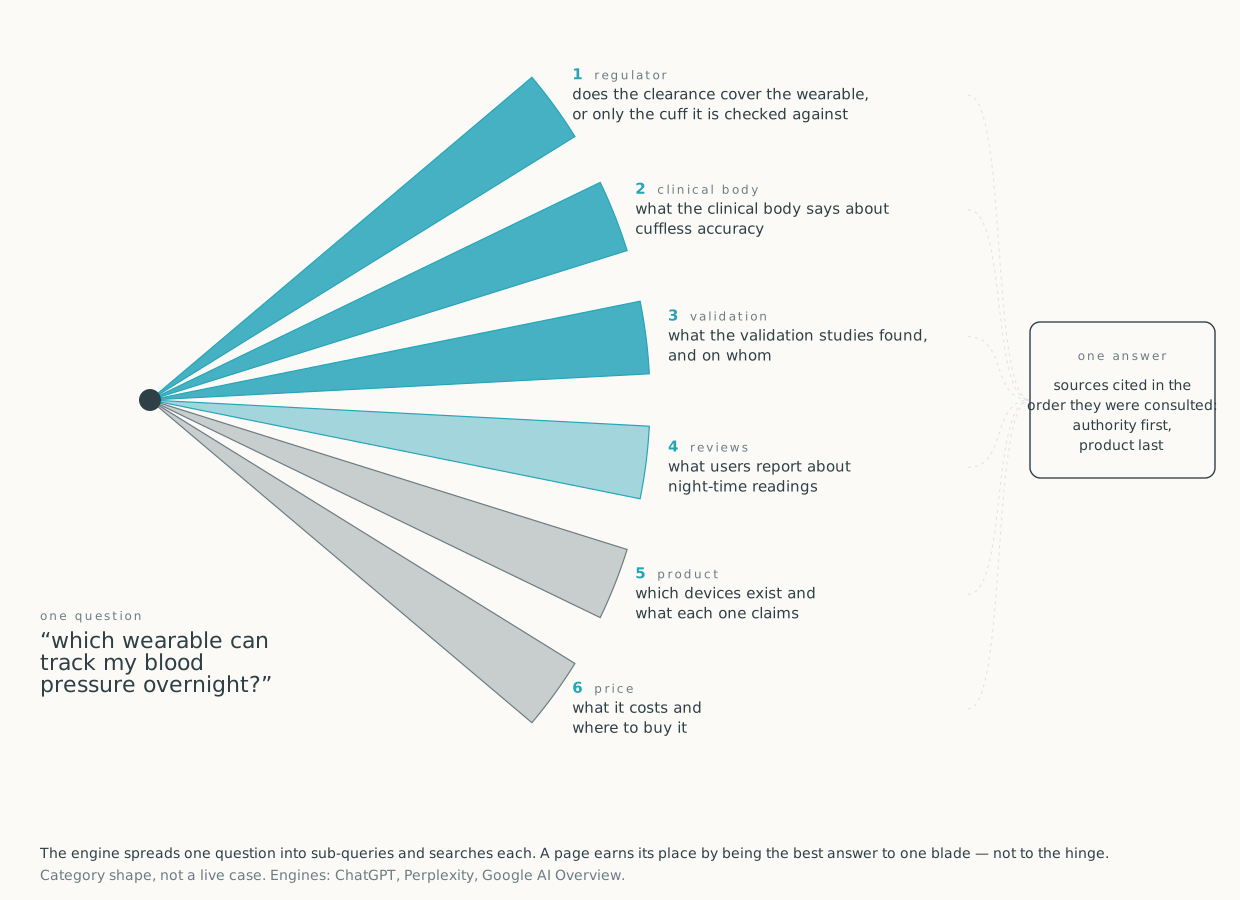
An engine spreads one question into sub-questions, searches each, then folds the results into one answer. On a device question, caution sets the order: authority first, product and price last.
A product appears in an AI answer.
A source is linked or identified as support for an AI answer.
One question spread into ordered sub-questions, searched separately and folded into one answer.
The question underneath
Did the person learn anything and change what they did?
A company makes claims for its product — to investors, to the market, to itself — and the engines repeat them. Most descriptions they settle on are about the device: cleared, validated, accurate, priced. Almost none say what the person learned.
What counts is the experience people actually have of it: what it let them do, what they learned, what they now trust themselves to manage. The two rarely match. The outcome a person is after, in their own life, is often not the one the product was built to claim — and the work is to make people good at the first, not the second.
We show what a good page looks like: felt experience, dated and specific. We help a maker's users write what they learned through the same process instructors use. Where that writing lives, and how it stays independent of the maker, is worked out with each client.
Next step
Book a call — twenty minutes, no deck, no prep
Bring one category question. We will read what the answer says and decide whether there is useful work to do.
Or write instead
Send the request
The second route, if a call is not the right start. Patrice reads every request himself and replies.